Despotia Discord

Office of the Registrar · Bureau of Foreign Affairs

The Despotia emblem: a crowned globe within a laurel wreath, brass on bottle green.

Despotia

Found a nation. Govern it however you see fit. Negotiate with the neighbours, and answer to your own people when negotiation fails. An asynchronous strategy game for phones — the world keeps running whether or not you are watching it.

Arriving

Fall 2027

The Ministry does not commit to a day.

Memorandum 01 · On the conduct of hostilities

Every nation here is run by someone who thinks they are the reasonable one.

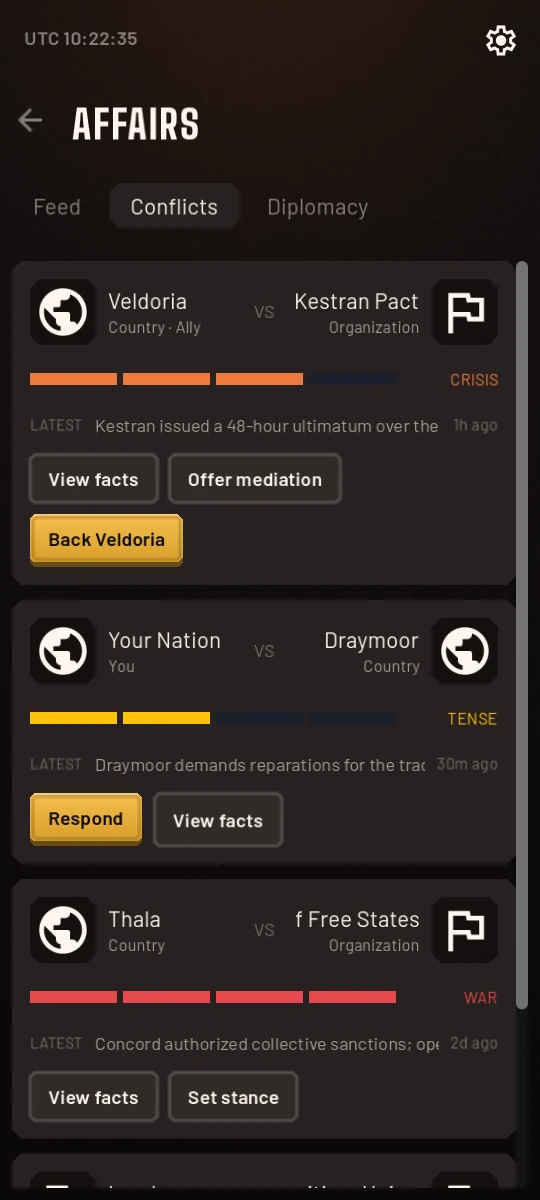
Despotia is a shared, persistent world of invented countries, and the other ones are people. You build a capital, run an economy, and spend most of your time working out what the neighbours want, what they are lying about, and which of them you can afford to annoy. Relations are earned through actual contact — visits, embassy exchanges, treaties, trade, sitting in the same organisations — and they accumulate into a record neither side can talk away.

Nothing in the rules stops you marching on a neighbour this afternoon. Diplomacy does not gate the ability to attack; it gates the legitimacy of it. A strike your own citizens never saw coming costs you their approval and can put unrest on your streets. Serve a declaration first and word goes out — to their guarantors, to your own obligations, to every organisation either of you sits in — and they get time to prepare.

Surprise, or the consent of your population. The Ministry regrets that you may not have both.

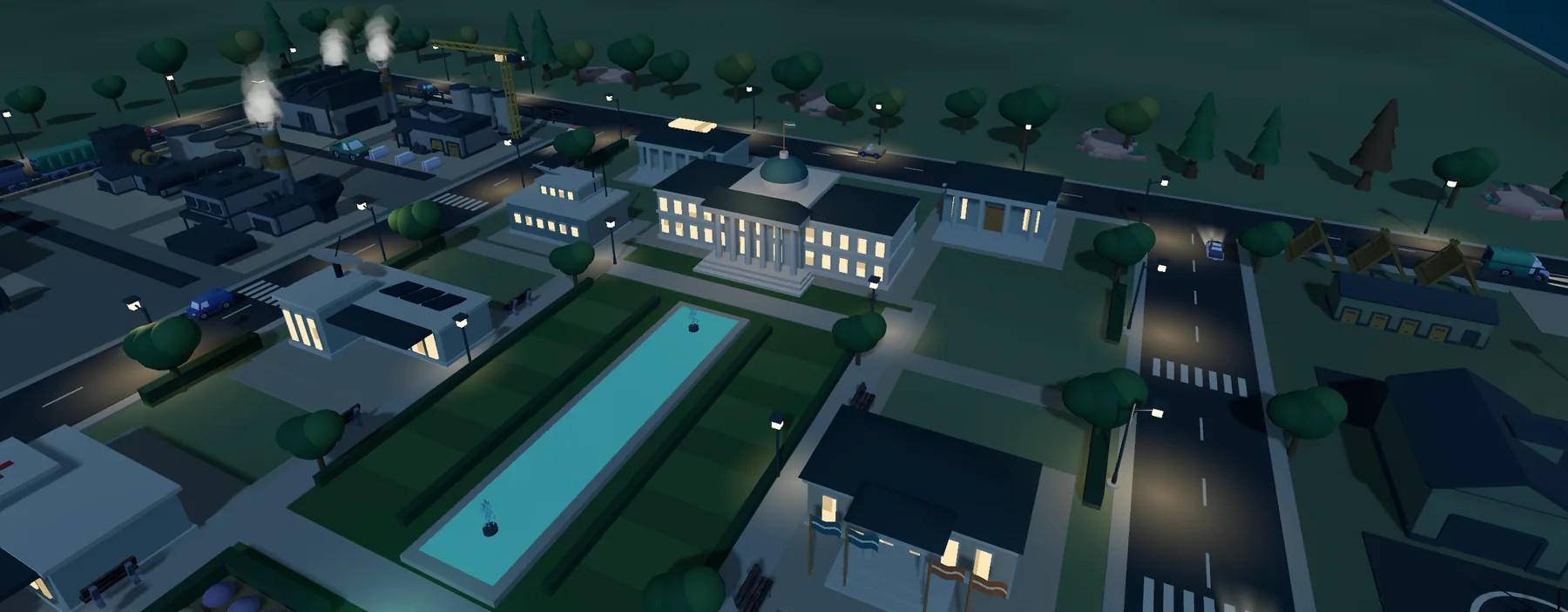
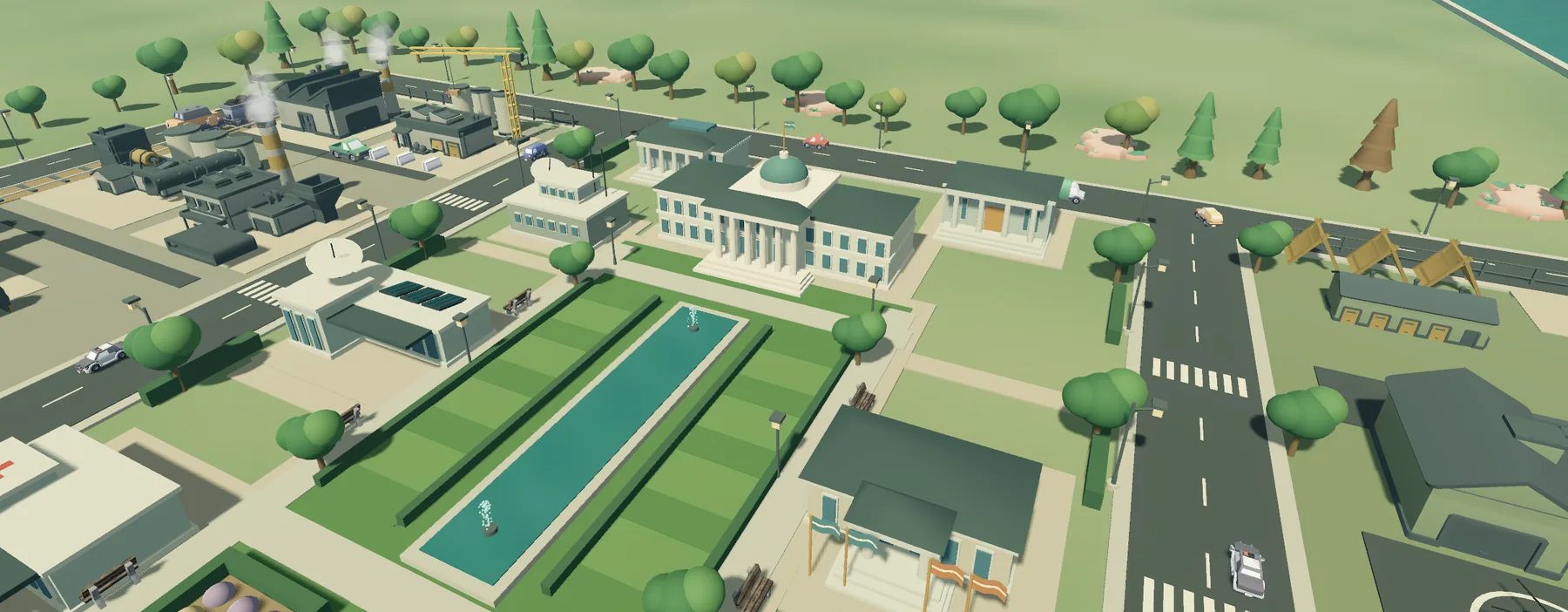
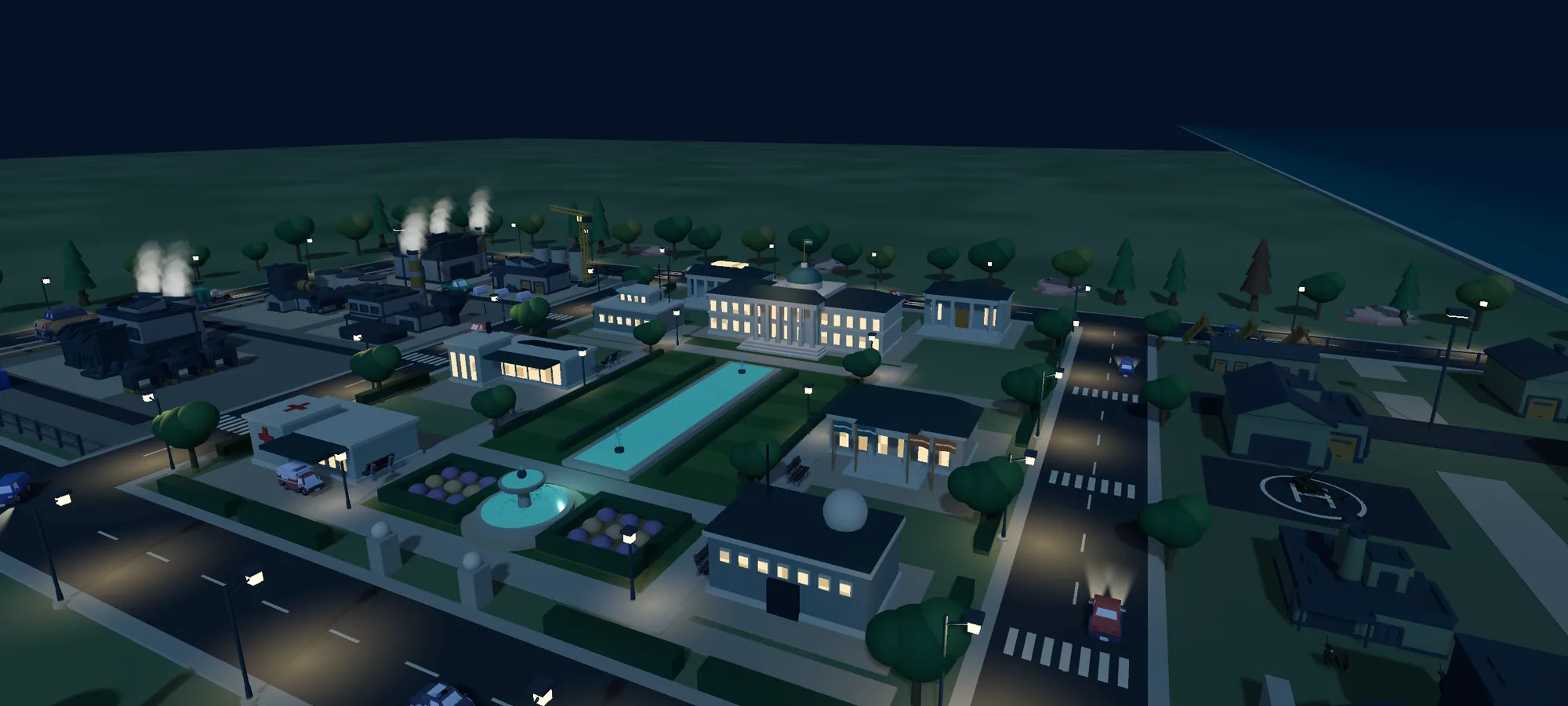
A low-poly government palace under construction on open grass, a tower crane standing over it. The city view in game: a columned government palace on open grass with outlying blocks, the power and treasury bar across the top, and the Battle, Affairs, Heroes, Items, Orgs and World tabs along the bottom.
Plate I — Capital district

Article I

Build the capital

The seat of government is a working town, not a skyline. There is no housing anywhere in it — this is a capital, not somewhere people live — and nothing on the lawn is decoration. Every structure is one you put there for a reason.

Your National Headquarters gates what the rest of the city may become. Wells, mines and quarries pull raw material out of the regions; mills, refineries and smelters turn it into steel, concrete, fuel and metal reserves; a power plant has to keep the lights on, because a deficit cuts output everywhere at once.

  • CommandHeadquarters · Command Center · Central Bank
  • IndustrySteel Mill · Concrete Plant · Refinery · Smelter
  • StatecraftEmbassy · Research Center · Intelligence Academy
  • AgeingBuildings advance through eras as they level, each at its own pace — your capital will be several centuries at once
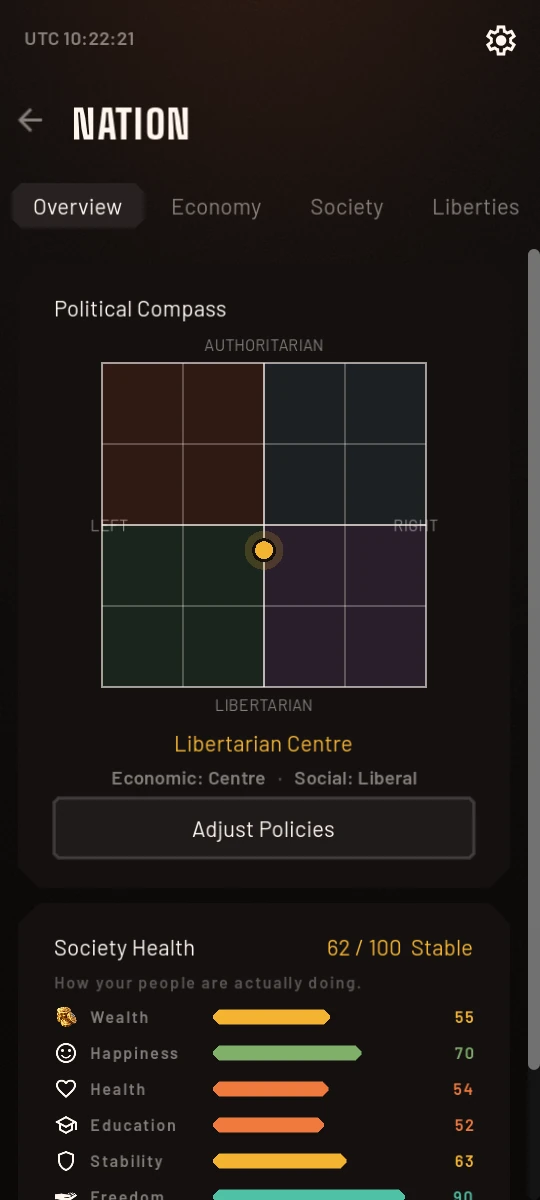
The nation dashboard in game, showing a political compass with the economic left-to-right axis and the authoritarian-to-libertarian axis, the current position marked and read back as Libertarian Centre, and an Adjust Policies button.
Plate II — Nation dashboard

Article II

Your nation, your rules

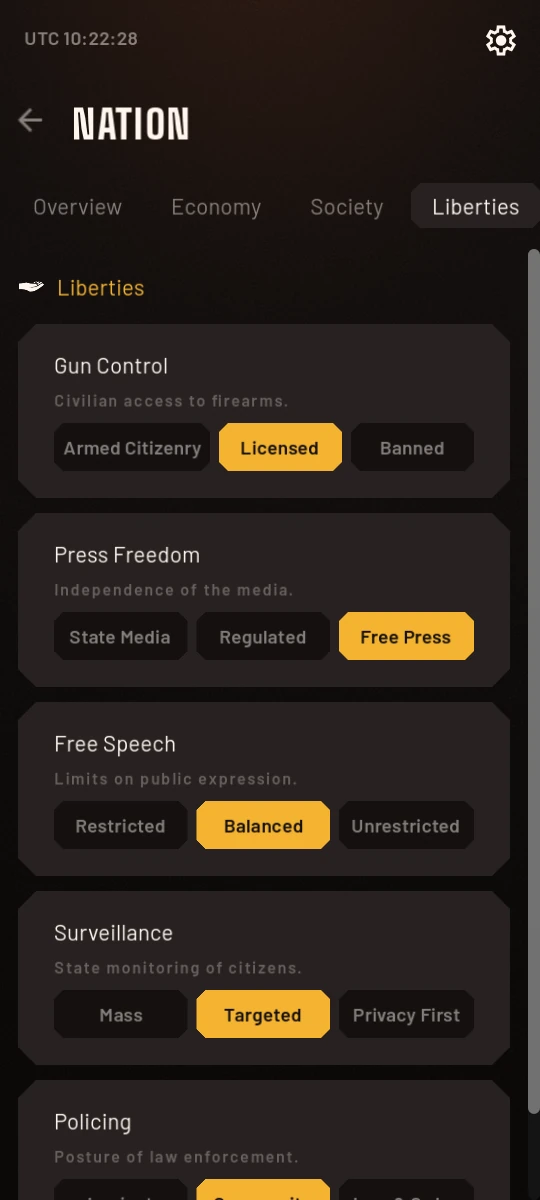
Nobody hands you a doctrine. You set policy across the economy, society and civil liberties, and the state you end up running is whatever those decisions add up to.

A compass on the nation dashboard reads your position back on two axes — economic left to right, social authoritarian to libertarian — and names what you have become. Run a liberal centre, a command economy, or something the neighbours find alarming. The game has no opinion about which of those is correct.

It has consequences instead. Wealth, happiness, health, education, stability, freedom and equality all move when you move, and your population lives in the result. Press freedom is a number too — which matters later, when you want the country angry at somebody.

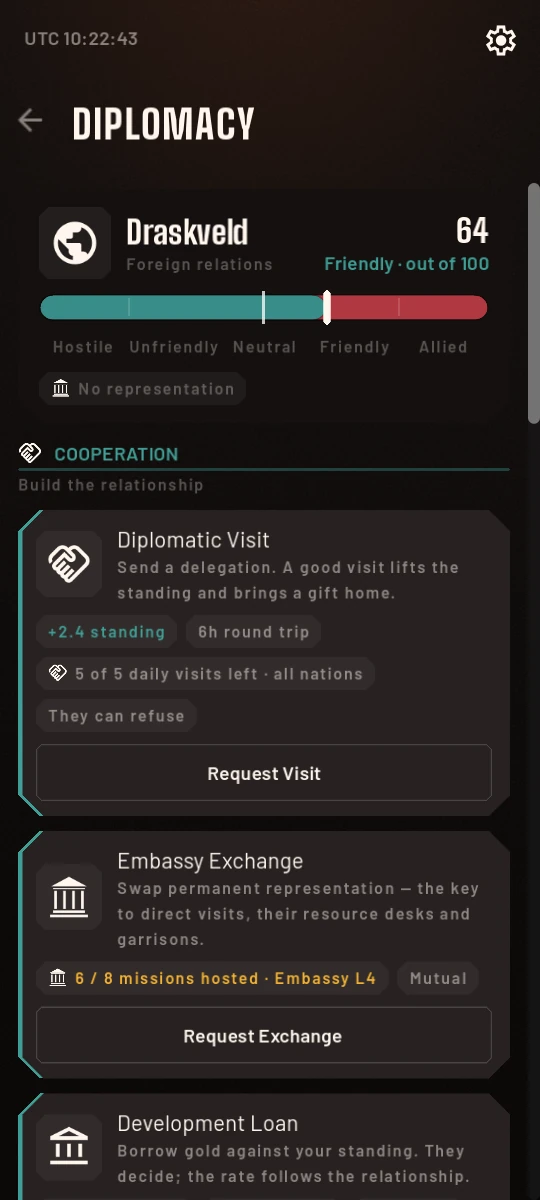
Two small low-poly embassy compounds facing each other across open grass, rows of flagpoles on each side and a dirt path running between them. The bilateral diplomacy screen in game, listing Peace Negotiation, Consider Hostile and a Fake News Media Campaign card with public hostility and press freedom meters on it.
Plate III — Embassy row

Article III

Conduct relations

Every other nation has one page, and one bar across the top of it: hostility red from the left, cooperation blue for the rest, with a bright line at the halfway mark. A word names where you stand.

  1. Hostile
  2. Unfriendly
  3. Neutral
  4. Friendly
  5. Allied

Cooperation is a set of things you actually do. Send a delegation and wait for it to come home. Trade embassy missions, up to whatever your Embassy has been built to house. Lend money at an interest rate your standing quietly decides for you.

Pressure is the other column, and every item on it is billed to you at home. Name a nation hostile without cause and your own citizens want to know why. Run a media campaign and public hostility rises while press freedom falls — both meters sit on the card, because the trade is the mechanic. Send spies and nobody will tell you the odds.

Valmoria Kesserheim Tarquine Belsorra Meridonne

Treaty, trade, shared bloc Grievance, hostility, war

Article IV

Found the blocs

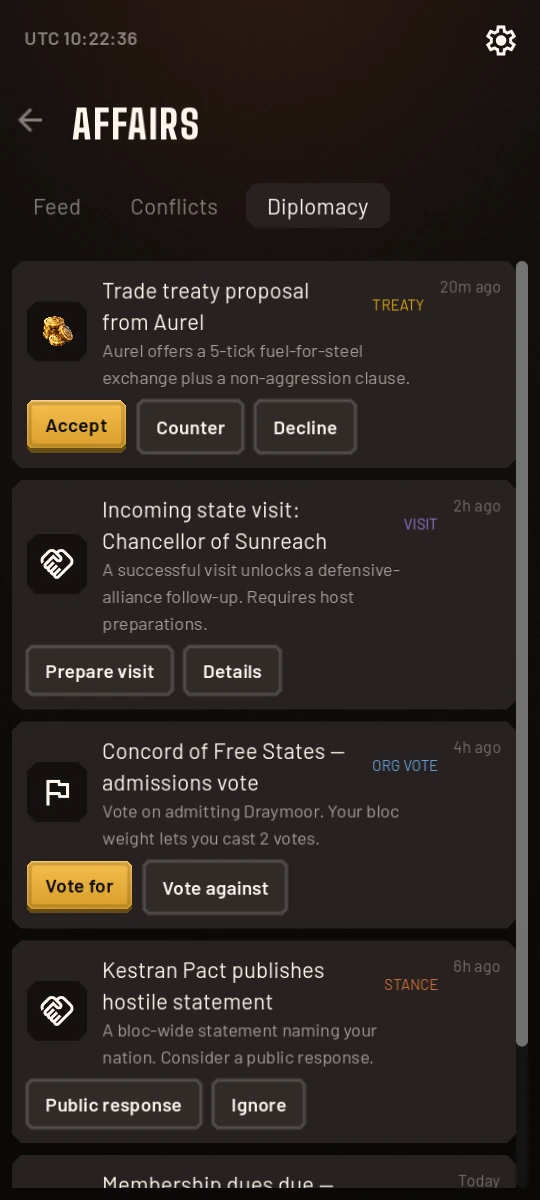
Bilateral relations are the groundwork. Organisations are where the world's shape actually gets decided — and you can found one.

A bloc is assembled from a menu of functions rather than picked off a shelf. You decide who may join: a floor on power, an ideology tag, a region, exporter status, or a standing rule against sitting in a rival bloc at the same time. Requirements can be hard — comply or you are out — or soft, where non-compliance is merely expensive.

That menu is why one organisation is a mutual-defence alliance, another is a customs union with a tariff wall around it, a third is a currency area, and a fourth is a chamber that votes sanctions onto outsiders. Nothing stops a bloc from being all four. Blocs are ranked against each other too, so the company you keep is part of your standing.

  • Admission Minimum power · ideology tag · region · exporter status · incompatible-bloc rules · observer seats
  • Economy Internal trade bonus · external tariff wall · common currency · membership dues · shared development fund
  • Defence Collective defence pledge · non-aggression pact · joint exercises · peacekeeping vote · sanctions package
  • Chamber Resolutions and votes · admissions and expulsions · rotating chair · binding arbitration · bloc-wide statements
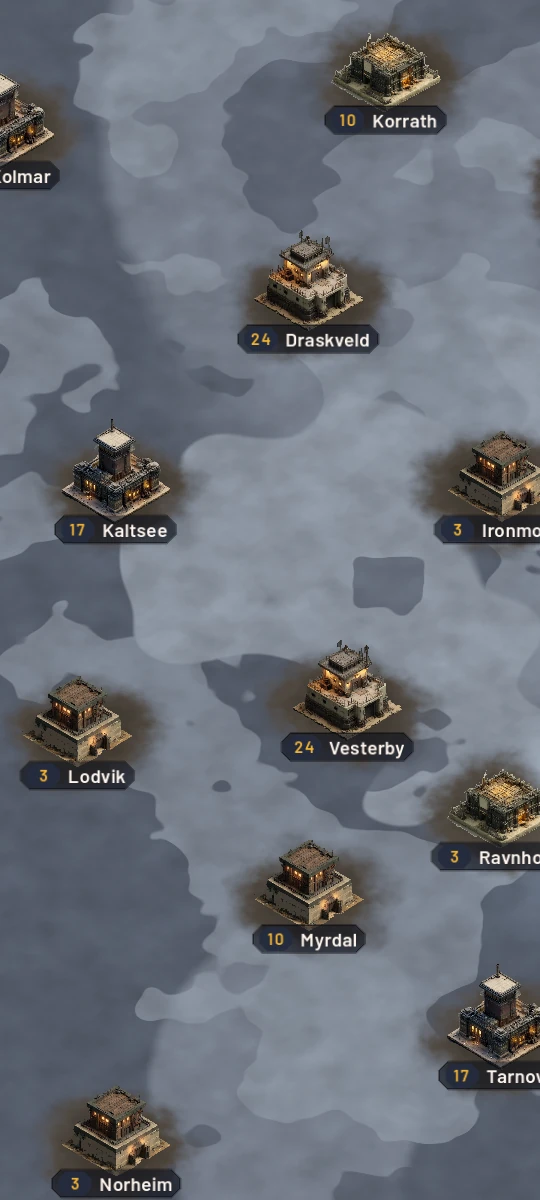
A small low-poly military compound: olive barracks huts around a dirt parade square, open vehicle sheds and a watchtower. The nation view in game: a hex field of named sites — Capital Command, Reactor Alpha, Northern Wall, Green Valley — with enemy-held hexes in red, and a running report of skirmishes and reinforcements along the bottom.
Plate IV — Frontier command

Article V

Go to war, if you must

Battles resolve on the server, in their own time. You raise a force, decide its composition, and the dispatch is waiting for you when you come back. Nobody has to be awake at three in the morning to hold a border.

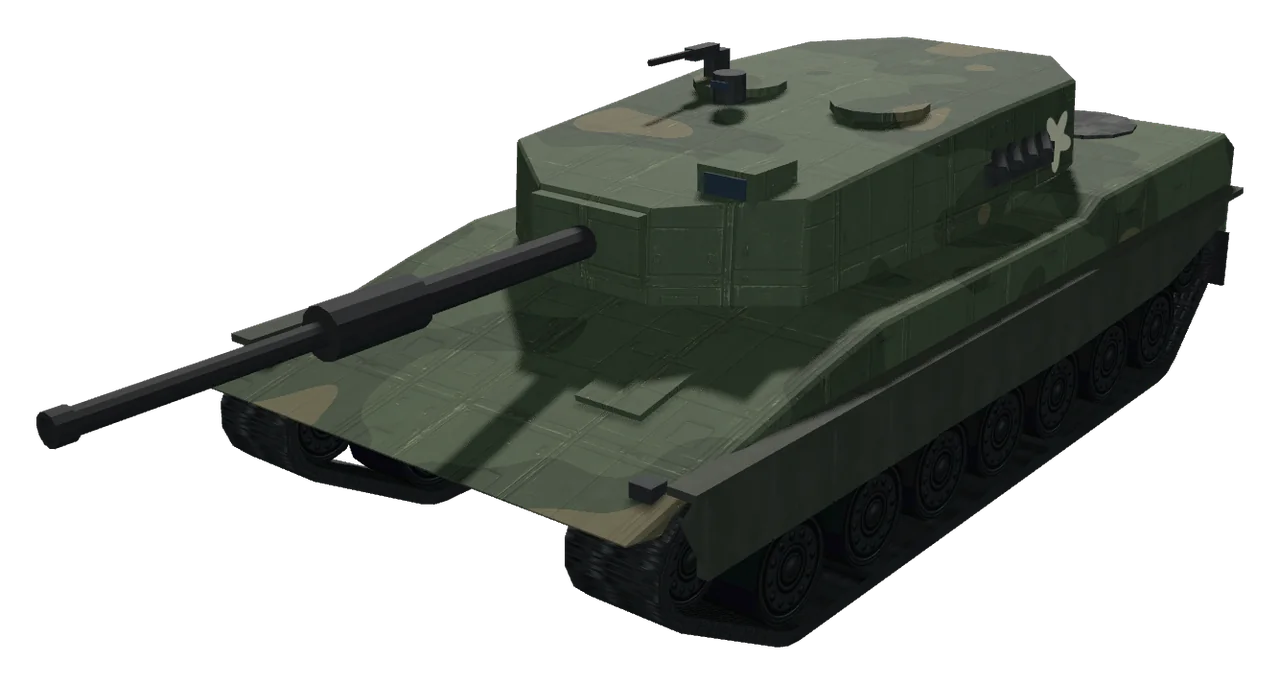
A unit card stays short enough to read at a glance: what it hits for, what it can take, how far it reaches, and how much of the field it can see. Ground, sea and air lean against one another in a soft cycle rather than a hard counter — ground beats navy, navy beats air, air beats ground — so a well-composed force still wins the matchup it was supposed to lose.

Vision is what ties it together. Units that can see the field find the minefields and the submarines, engage more of the enemy line at once, and are the ones still standing on the ground afterwards. A blind heavyweight walks into things a scout would have spotted an hour ago.

  • GroundThe tanky line · takes and holds objectives · cheap, and there are a lot of them
  • NavyRange and tempo · carries air power to somebody else's coast
  • AirGlass cannon · burst nothing else matches · holds absolutely nothing
  • EmplacementsMinefields, sea mines, fortifications · they do not manoeuvre and they do not fight — they decide where the fighting happens
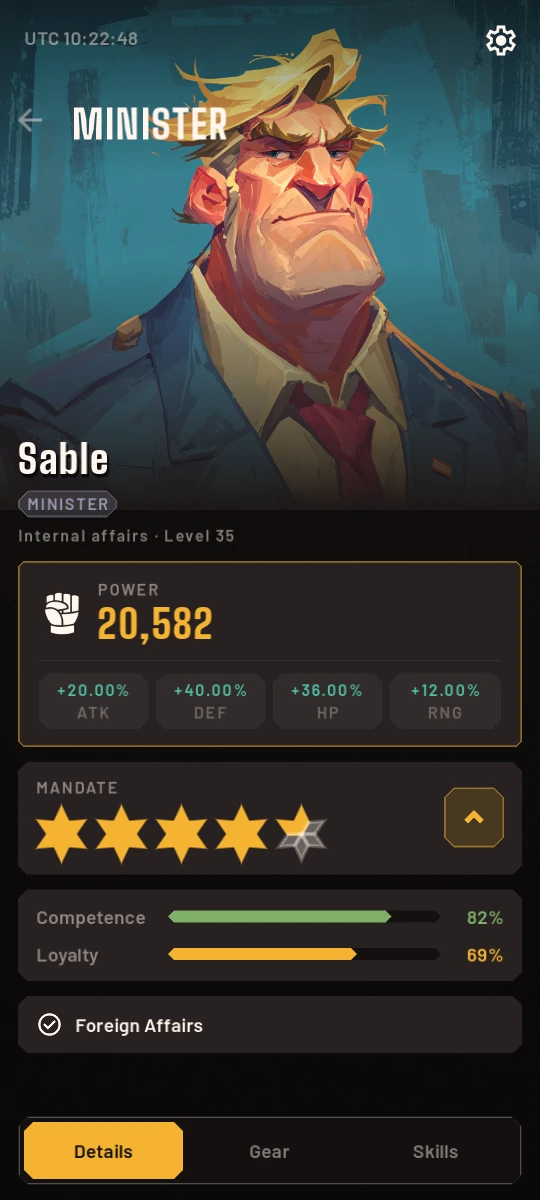
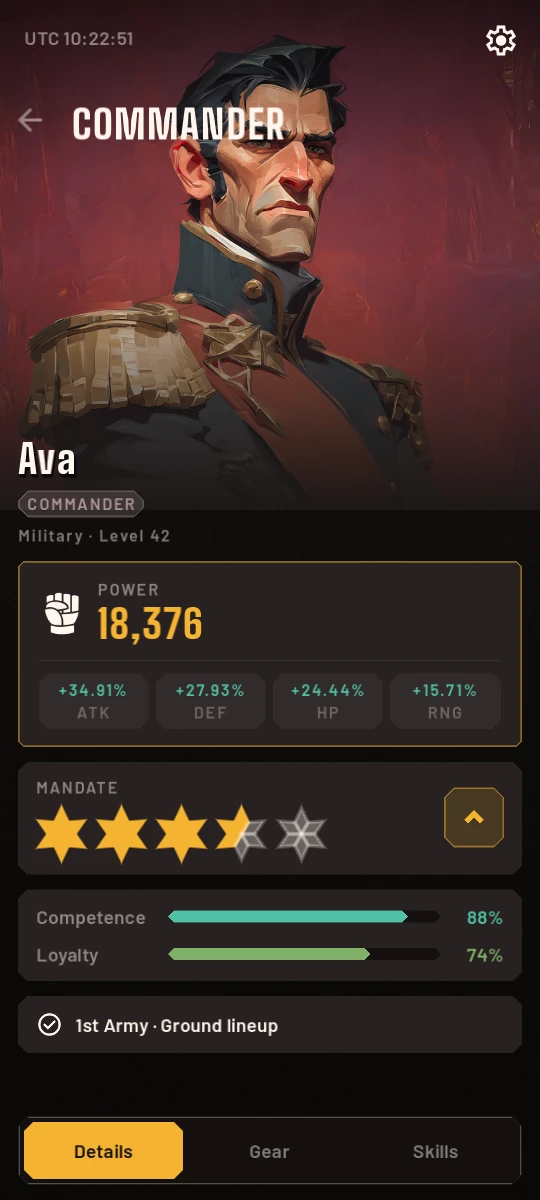
An empty raised podium on open grass, flagpoles either side and rows of empty seats facing it. A hero page in game: a minister named Sable, tagged Technocrat, with Competence and Loyalty bars, an assignment to Foreign Affairs, and the effects that assignment grants.
Plate V — The rostrum

Article VI

Appoint the cabinet

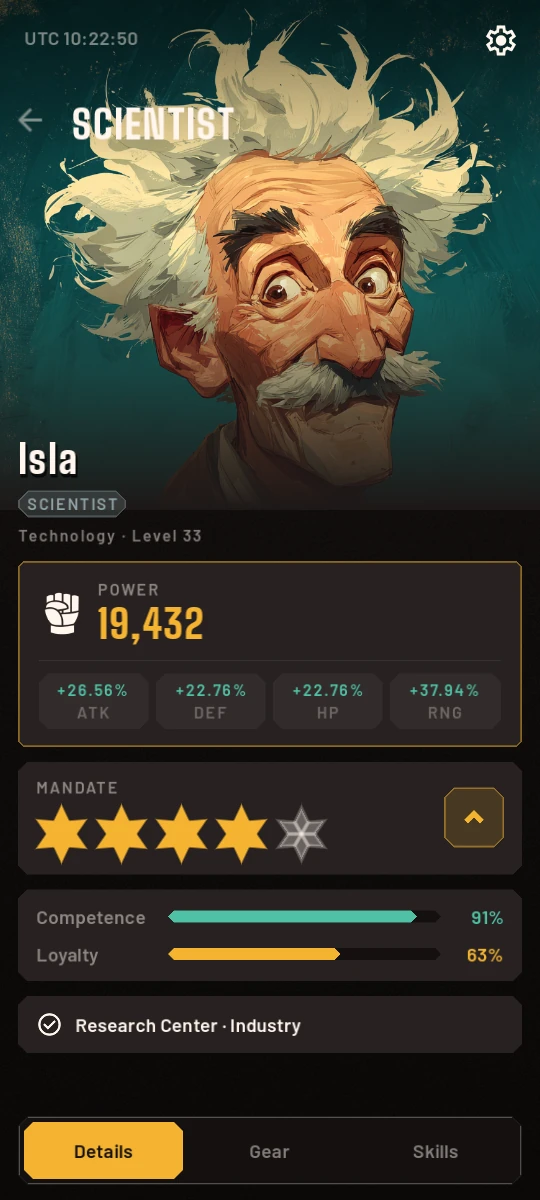
Somebody has to actually run the ministries, and the people available for the job are a mixed bag. Heroes come in three families, and the colour of a card tells you at a glance what that person does for the state.

  • Commander Military. Battle lineups and domain bonuses.
  • Minister Internal affairs. Policy outcomes, stability, diplomatic weight.
  • Scientist Technology. Research speed, production, extraction.

Competence and Loyalty are measured separately, which is the interesting part: a brilliant minister who does not much like you is exactly as useful, and exactly as dangerous, as that sounds. Character is a word rather than a score — hawk, dove, technocrat — and it colours the advice that reaches your desk.

An unassigned hero is drawing a salary and improving nothing. The roster says so, in as many words, rather than leaving the slot politely blank.

Bulletin · Issued irregularly

The state publishes its own minutes

Despotia is being built in the open. Work in progress, design decisions and the occasional humiliating reversal are published as they happen rather than saved up for a trailer. Everything lands in the Discord first, unflattering items included.

Present your credentials

The Discord is where the game is being built in public, and where the first nations will be founded. Come early and you get to argue about the rules while they are still soft.